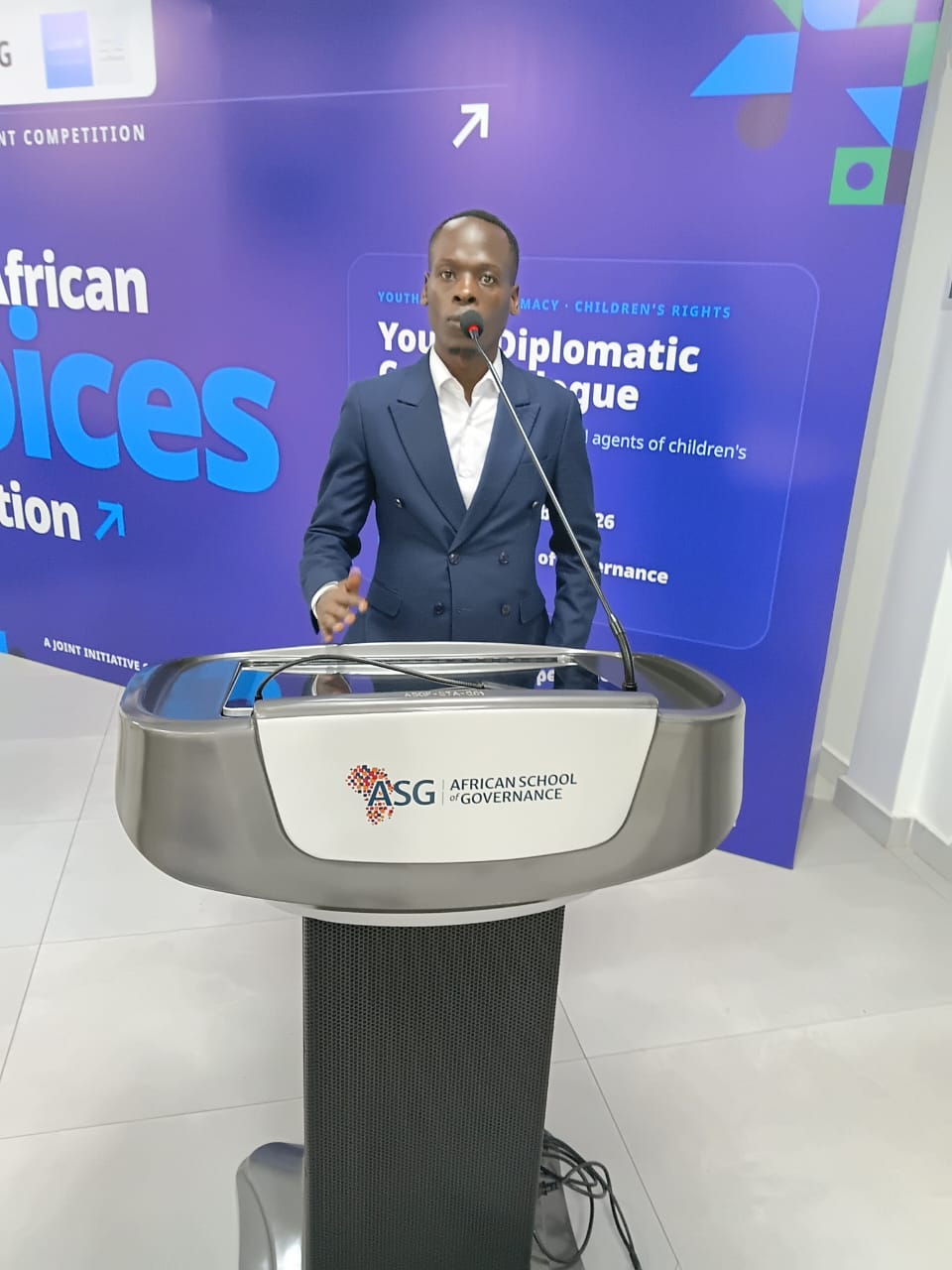
UNICEF Innovation Challenge
Student Innovations in AI and Digital Health: UNICEF Innovation Challenge Rwanda @ 40 .2026
Two student-led innovations from the Centre of Excellence in Biomedical Engineering and e-Health (CEBE), University of Rwanda: AMBERE, an explainable machine learning solution for early prediction of child malnutrition, and SHMS, a School Health Monitoring and Referral System.
Overview
Student innovators at the Centre of Excellence in Biomedical Engineering and e-Health (CEBE) of the University of Rwanda have been recognised in the UNICEF Innovation Challenge – Rwanda @ 40 (2026), where they were selected as finalists. Their work showcases practical digital solutions to some of the country’s most pressing child and school health challenges.
This page presents the two digital health solutions. AMBERE uses explainable machine learning on national survey data to predict child malnutrition risk, identifying children at risk before physical growth deficits appear. The School Health Monitoring and Referral System (SHMS) connects schools with healthcare facilities through digital referrals, so that every referred child can be tracked from the school to the clinic and back.
Common aim: to use data, artificial intelligence, and interoperable digital tools to support earlier intervention, stronger communication between health and education actors, and evidence-based decision-making for children in Rwanda.
Innovations at a Glance
The Innovations
Project title: AMBERE – Explainable Machine Learning for Early Prediction of Child Malnutrition in Rwanda
Project team
- Mutarambirwa Renauvat, Team Lead
- Teto Alia, Team Member
Institutional affiliation: University of Rwanda, Centre of Excellence in Biomedical Engineering and e-Health (CEBE), and Carnegie Mellon University Africa.
Competition: UNICEF Innovation Challenge Rwanda @ 40 · 2026.
AMBERE is an explainable machine learning solution designed to support the early identification of children at risk of malnutrition in Rwanda. The project addresses the limitations of conventional screening approaches, which often detect malnutrition only after physical growth deficits have already appeared.
The platform uses national survey data to predict the risk of underweight and stunting among children under five. It generates individual risk scores and explains the factors contributing to each prediction, enabling health workers to review the results and support early preventive interventions.
According to the project’s presentation, Rwanda DHS 2025 data indicate that:
Traditional screening approaches may identify malnutrition only after measurable nutritional deficiencies have developed. AMBERE seeks to provide an opportunity for earlier risk identification and intervention.
The project uses two machine learning models:
- LightGBM: for predicting underweight among children.
- CatBoost v3: for predicting stunting.
The models were developed using Rwanda Demographic and Health Survey (RDHS) 2019–2020 data and independently validated using RDHS 2025 data. The project also applies SHAP (SHapley Additive exPlanations) to explain the factors influencing individual predictions.
The underweight model demonstrated 91.21% sensitivity, indicating that it detected approximately nine out of ten children classified as at risk in the validation dataset.
The SHAP analysis identified several factors associated with the model’s predictions:
- Children under five and their caregivers.
- Nursery schools and Early Childhood Development (ECD) centres.
- Healthcare facilities and health workers.
- Nutrition programme managers.
- Policymakers and researchers.
AMBERE demonstrates how explainable artificial intelligence can support data-driven approaches to child nutrition monitoring. By providing early risk predictions and explanations, the innovation has the potential to strengthen preventive nutrition interventions, support health workers, and inform evidence-based policymaking.
Project title: Closing Rwanda’s School-to-Clinic Gap for Every Child: School Health Monitoring and Referral System (SHMS)
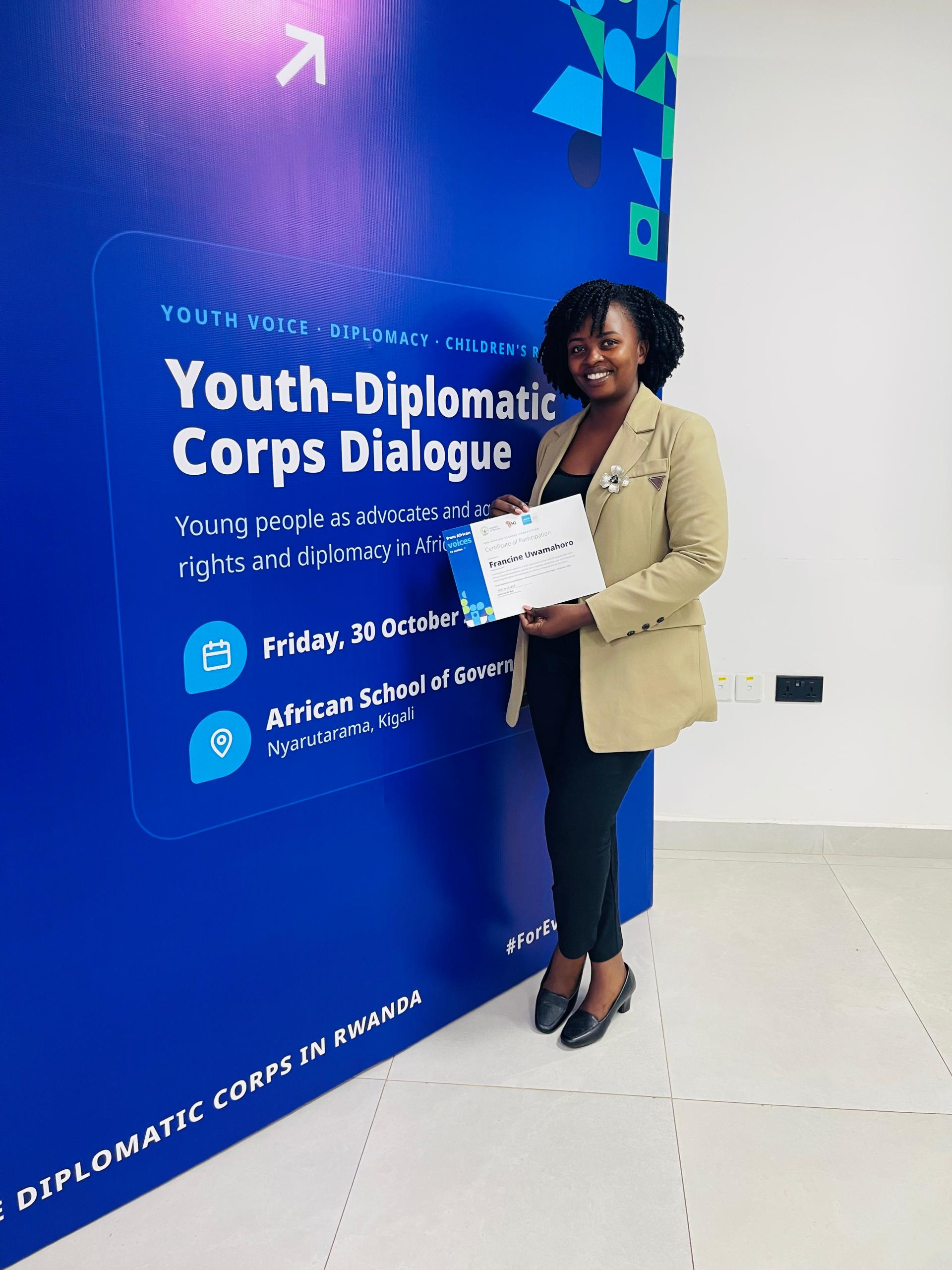
Project developer: Francine Uwamahoro
Academic programme: MSc in Health Informatics
Institution: Centre of Excellence in Biomedical Engineering and e-Health (CEBE), University of Rwanda.
Competition: UNICEF Innovation Challenge Rwanda @ 40 · 2026.
The School Health Monitoring and Referral System (SHMS) is a digital health platform designed to connect schools with primary healthcare facilities in Rwanda. It addresses challenges associated with paper-based health referrals, limited communication between schools and health centres, and the lack of electronic feedback on children referred for medical attention.
The system digitizes the school-to-healthcare referral process, allowing school nurses to record health events, initiate referrals, and receive updates from healthcare providers. It also enables parents and schools to receive notifications about referral outcomes, improving communication and continuity of care.
The project identifies significant gaps in communication and referral tracking between schools and healthcare facilities. A needs assessment conducted in schools across Kicukiro and Gasabo Districts found that:
- Referrals were primarily managed through paper notes and telephone calls.
The document further highlights that existing digital health infrastructure, including DHIS2, Health Exchange Architecture, and electronic medical records, does not adequately provide feedback to schools.
The platform digitizes five stages of the school-to-clinic referral process:
- Health event recording: a school nurse records a health event and initiates a referral in under two minutes. The platform supports offline operation.
- Referral reception: the healthcare facility receives the referral through a triaged digital inbox.
- Clinical assessment: the clinician confirms the child’s arrival and documents the treatment provided.
- Feedback and notifications: the school and parent receive feedback and urgent alerts through SMS and in-app notifications.
- Monitoring and reporting: district and ministry supervisors access live, anonymized dashboards instead of relying on delayed paper reports.
The project incorporates several important digital health features:
- Offline-capable operation.
- SMS and in-app notifications.
- Role-based access aligned with MINEDUC and Ministry of Health responsibilities.
- HL7 FHIR-aligned data model.
- Potential future integration with DHIS2 and eBuzima.
- Live, anonymized dashboards for supervisory monitoring.
The structured data collected through the system also provides a foundation for a potential AI-assisted early-warning system to identify unusual illness or malnutrition patterns across schools.
The submitted project document reports that SHMS is a working prototype with five functional interfaces and a complete referral lifecycle. Its development was informed by a needs assessment involving 24 stakeholders from schools, health centres, and the two ministries.
Closed-loop referral feedback was ranked as a top priority by every nurse consulted.
SHMS aims to:
- Improve tracking of children referred from schools to health facilities.
- Strengthen communication between school health personnel and healthcare providers.
- Ensure parents and schools receive referral updates.
- Improve accountability throughout the referral process.
- Support timely health interventions for school-age children.
- Provide structured data for monitoring and evidence-based decision-making.
The project also identifies alignment with Rwanda’s Health Sector Strategic Plan V (HSSP V) digitalization priorities.
The project identifies three important requirements for implementation at a larger scale:
- An inter-ministerial data-governance agreement between the Ministry of Health and MINEDUC.
- A funded six-month pilot involving 5–8 schools and two health centres.
- A usability evaluation involving nurses and clinicians.
Gallery